
 Apple Podcasts
 Spotify
 YouTube
 Inner Work: Conscious Leadership in a Changing World
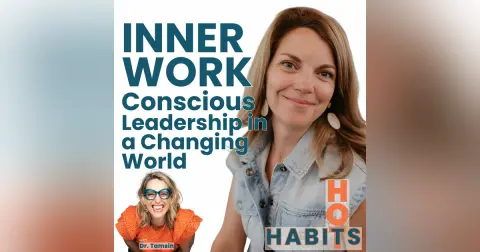
Ever wondered how daily habits reshape your brain—and your leadership?
This engaging episode is packed with “big juicy” conversations about self-responsibility, influence, and reactivity. Dr. Tamsin and Adair Cates share wisdom from their personal journeys, corporate experiences, and life as mothers, partners, and creatives. Get practical insights on self-leadership, vulnerability, and how to show up authentically in work and life.
Here’s what you’ll learn in this episode:
How Adair blends neuroscience, mindfulness, and breathwork for true transformation.
Why journaling and pausing are key habits for conscious leadership.
How perimenopause and midlife reshape our leadership approach and personal habits.
The importance of vulnerability, self-compassion, and repairing relationships—at home and at work.
Why being well-resourced and regulating your nervous system is the ultimate superpower for today’s leaders.
Listen for real talk and practical wisdom on building leadership that starts from within.
A little more about today’s guest -
Adair Cates, a transformational Conscious Leadership coach and facilitator with over 20 years of experience in personal / leadership development, is the driving force behind the Conscious Leadership practice at xchange, collaborating with renowned experts to merge neuroscience, mindfulness, and breathwork for accelerated leadership / personal transformation, from the inside out. Adair has designed and facilitated thousands of transformative conversations for organizations like Microsoft, Meta, and Conscious Capitalism, unlocking potential, promoting well-being and creating deep communal learning experiences through her unique blend of science-based practices and spiritual wisdom. A mother of twins and three bonus kids, fiance to xchange founder Jon Berghoff, and author of two self-development books, Adair's personal and professional experiences make her a sought-after expert in personal growth and elevating consciousness.
Best ways to connect with Adair -
https://substack.com/@adaircates
https://www.linkedin.com/in/adaircates/
I'm Dr. Tamsin Astor, and I am neuroscientist who studies habits in teams, relationships and systems. I'm obsessed with one question: which habits are quietly running your life, and which ones could change everything?
I work with founders and leadership teams to identify the invisible defaults driving their culture, their communication, and their results and then we redesign them, from the inside out.
My approach is B2P: Business to Person. Because no one shows up as just "the CEO." You're a founder, a colleague, a parent, a partner, a human… often all before lunch. When you only change habits in one role and ignore the others, you get burnout, misalignment, and a culture that feels brittle no matter how good your strategy is.
My work blends neuroscience, habit design, conscious leadership, and relational intelligence — because your relationships are your leadership. Full stop.
Clients usually find me when they're exhausted from putting out the same fires and starting to suspect: this isn't just a strategy problem. It's a human habits problem.
I believe how you live and lead ripples outward: into your team, your family, future generations. My core values are freedom and love, and everything I build is grounded in honest communication, smart systems, and deep care for people.
Underneath it all? Relationships are my north star.
Let’s keep the conversation going.
Join my Substack - https://drtamsin.substack.com/
Check out more episodes - https://www.hothabitspodcast.com/
We spend so much time chasing the external markers of leadership, the title, the KPIs, the headcount, and almost no time asking the harder questions. Who is actually showing up to lead? In this conversation, Adair and I find ourselves returning again and again to the same uncomfortable truth, whether we're talking about paramanopause, people pleasing or working inside giants like Microsoft and Google, because it turns out none of the external work lands if the internal work hasn't been done first. Your nervous system sets the tone. Your energy speaks before you do. How you show up is the culture. I'm Dr. Tam's in Aster and this is Hot Habits, Conscious Leadership in Action. Well, welcome, welcome. Today I am joined by Adair Kates, who leads the Conscious Leadership Practice at Exchange. She blends neuroscience, mindfulness and breath work into conversations that don't just inspire change, they rewire it. Adair's work upgrades leaders from the inside out. She's also one of the people who helps me stop apologising for what gets labelled Wu, which is a word I genuinely love and she helped me stop naming it for what it actually is, human operating system maintenance. Adair is also a fierce advocate for women in midlife, paramanopause here. You are learning to lead from a place of being deeply well-resourced, rather than running on empty and burning out. With more than 20 years guiding personal professional transformation, she's held companies like Microsoft and Meta, unlock potential potential through conversations that are equal parts, science, soul and practical magic. Adair in her life is the mom of twins, bonus mom of three author and partner and now fiance to John Burgoff in building a global leadership movement and you've got someone who doesn't just teach transformation, she lives it. In our personal WhatsApp messages, we've exchanged conversations around existential kink, the wonderful book by Carolyn Elliott and the importance of surfacing that which we naturally hide. Adair is someone who brings depth, presence and humanity into leadership in a very lived way. Welcome Adair. Oh, what a thoughtful introduction, Tamzan. Thank you so much. I'm so honored to be here with you. I'm so excited that you're here having this conversation today about conscious leadership and habits and that joyful stage of midlife that we are both in right now. Here we are. So I like to start my hot habits, podcast conversations by asking my guests to bring in an object with them, something that represents a hot habit in their life. So this is a way of bringing leadership out of theory and into your everyday reality. So what object did you bring with you today and why did you choose it? Well, can I share two? Sure. Okay. It's the rules. I love it. All right. I'm breaking the rules in the first two minutes of the podcast. That's perfect. So I always keep this crystal heart on my desk because the habit of living from my heart doesn't always come naturally for me. I can beat very heavy and neurosciencey and in my head versus my heart. So this object reminds me to practice heart coherence, to breathe through my heart, to tune into my heart, to drop the walls around my heart, to be vulnerable, to bring intimacy into the work that I do. And trust me, I need the reminder. That's awesome. I mean, what's interesting about that too is I feel like that's something, I mean, what's interesting is that you flagged that as a habit that you've had to cultivate. That's right. That's right. Also, I feel like that's something that in the corporate world is not like front and center, you know, and that you kind of going, hey, let me just put this front and center creates a different kind of lead into the conversations and interactions you have. Well, thank you for noticing that. You know, I think especially this day and age where, you know, we have AI and instant gratification and, you know, instant feedback and this desire in this need to, you know, I'm thinking of just these dopamine hits that we get, right? And that's, that really feels like I feel like the head part of us, but we really need this day and age, the oxytocin. We need the heart fuel. We need the slowdown, connect, get intimate. Let's get cozy together because the other, the other world is there in droves and we have plenty, plenty of it everywhere we look. And so this, you know, this heart is a reminder to like not get too pulled into what the world is saying is really important right now and to keep tuning in to what's really important to me. I love that also, that acknowledgement of the personal in the way you do this work, right? Because it's very easy to sort of go into these interactions and these situations and these, you know, corporate engagements, right? All kind of contracts and it's all sort of follow the rules and this is the deliverable and this is the KPI and it's just like, I'm a human in this experience. And that's what you really fight it. Yeah. Yeah. I'm a human and we don't have to go into it now, but to me, that is the beauty of midlife and the beauty of permanent pauses. It's become so obvious that leaning into my heart is an important piece of who I am, but I've masked it and put it to the side and said, this is another part of me. And I feel like in this midlife stage, it's like, oh, well, I can't hide that anymore. It's like, it just wants to be here. I love that. And I would love to circle back around into the permanent pause and the way that it forces us to sort of reckon with the habits we have. Yes, definitely. It's a good way to put it, right? And redefine what conscious leadership means in this stage, right? Do you want me to show the other object? Yeah, let's do it. Okay. Because you said conscious leadership. So this kind of goes along with this. Well, I have right beside of me this conscious leadership journal, which is the part of our conscious leadership accelerator program at exchange. And why this object reminds me of, you know, the hot habit is because journaling every day journaling is such an important part of what I do. And whether it be in this journal or currently I'm in this, you know, deep into a sacred prayer journal that I'm using every single day, me connecting with my thoughts through the written word is a habit that really helps me to tune in to that more creative part of who I am of my true essence. So the journal is another really key object. I mean, there's a couple of things I'd love to sort of dig in with this. And I love that our conversations can always go in a million different ways. Yes, me too. It's fine. But the first thing I want to sort of flag is, and maybe it would be helpful for you to define what you mean by conscious leadership. One of the things that you're articulating about journaling, which I was massively resistant to, because it felt to me like I wasn't productive, a little bit like meditating. So many of these kind of things that I know resource me and I know help me do better in all the things that I care about when it like, you know, when you go for it, when you go to the gym or you take a class, you're like, caching, I've got my steps in, I've, you know, I've done my cardio, I've done my right. But something about journaling and meditating for me sometimes when I'm feeling the call of work and feeling pulled into family and all of the other things, the sort of the immediate productivity part of it doesn't feel as explicit. But what you acknowledge and one of the things that I know from journaling for 20 years is that when I journal, it moves things from the unconscious to the conscious often. And it creates as your level of kind of objectivity, which when we're in that kind of subjective swell, we get lost in. Yes. And I feel like things get lost inside of us. And, you know, I've often found that journaling is something I need to do every single day. But every single day, I don't always have some big aha or insight or, you know, meaningful download that I'm like, oh, this is life changing. But it is truly that gradual habit of, okay, I'm going to devote this time and energy and space to these words in this moment. It's the habit itself that ultimately lends to, again, going back, feeling more connected to my heart and what matters most to me and feeling more connected to, you know, where I'm going, like what direction I might be moving in. And, you know, we define conscious leadership in our work as being aware of our influence. And being aware of our influence, there's no way we can be aware of it until we know what's happening inside of us. I think so many of us think that influence is this outward expression. And what I've learned through this work, that it is deeply internal first and foremost. And so that connecting with myself through writing, you know, it's the gateway. It's the opening of self leadership. It's the opening of self responsibility. Like, things show up sometimes in my journal that I'm like, crap, I didn't know that was there. Like, I kind of hate that I just admitted that to myself, but I did. So what am I going to do with that now? And then I get to sit with it and be with it and notice it and take it wherever it might need to go next. But, you know, influence to me and all in all of our conscious leadership work at exchange is it's really all about self leadership way before it is about how do you influence somebody else? Yeah, no, that's interesting. That sort of makes me think about, is it like, is it a verb or noun? Right? Yes. Yes. You're doing with that word. And I think what I mean, what's interesting about what you said too, is that is the vital nature of looking within if you are going to be a successful leader. And I feel like one of the things that is shifted. For me, it was when I read Vivian Laciani's book, Vishad Laciani's book, The Buddha and the Badass, you know, the guy who started Mind Valley. You know, he talks about the the the Buddha is that intuitive looking within being willing to slow down and figure out what's going on inside. And then the badass is the kind of entrepreneurial energy of like being willing to take the risk and to rebel and to create something new and to kind of step into the unknown. And it's weaving those two together that makes us good leaders. And I feel like, you know, since COVID, there's been a much bigger shift when a lot of us were suddenly working from home and all of our roles suddenly collided with each other when it was easy to have boundaries before. And it created this energy around, oh, I have to look within. Right? If I'm going to be successful at any of these things. And so I can really understand how I'm showing up as a mother, as a partner, as a business owner, as a friend, when it's all happening in the same space and in the same time often, right? Yeah. And the irony for that of that for me is for years, like even when I was in the corporate world doing internal leadership development inside of companies, I often times craved and talked about even in a lot of my teachings, this whole idea of work life, not work life balance, but work life integration. And it's really been the thing I've craved more than anything throughout my entire career is how can I just show up as me everywhere to where I don't feel like I'm here's home version of me here's work version of me. But to me, just that being that authentic expression is so incredibly important. And again, to me, that is conscious leadership. It's how can I show up as the authentic version of myself wherever I go? And that's not to say that you're going to necessarily have the same types of exact same types of conversations or deep, you know, relationships or whatever it might be. However, how much of myself am I able to reveal? And for me, the more of myself that I can reveal in any space, the more I feel at home in the world, when I feel like I'm hiding something or I'm filtering myself or I'm not really being true to my own values in a situation, I just feel like something's missing. And I don't want that anymore in my life. And I think this again goes back to that midlife phase that we're in is it's really hard as we get, you know, older in our hormone shift, it's hard for us to be someone other than who we are. Those filters start to dissolve a little bit. Yeah, no, that's really interesting. And like, so, you know, I was reading this post the other day, because I follow a lot of perimenopause or menopause, all feminism's writers on substack. And one of them was saying that, you know, the reason that women end their marriages in menopause and perimenopause is not because they, you know, have suddenly like had enough. It's because they have suddenly not got the protective nature of all of the hormones, which has allowed them to tolerate a lot of the BS that they were dealing with before. And that is a reframe for me. I found really fascinating, right? So this idea of like, I just don't have it in me to to fake it anymore, you know? And I think, you know, I mean, one of the things is interesting is I grew up with a very sort of active dinner party table conversation, dining table conversation in my family when I was a child. My father is a youngian analyst. And, you know, we always had these deep conversations at the table. And one of the things my mom said to me, which I've revisited more, particularly as you like in the sort of more perimenopausal state was, my mom said to me, if you want to build intimacy with people, you need to be willing to talk about what you find hard and not just talk about what is what you find easy and that everything's fine. And for me, that really set in motion this idea that I find it hard to be in relationships with people who are just the everything's fine, you know? And like, really? Really? Is that really true? You know, like what's going on in there? Come on, let's get a bit deeper, you know? And so for me, it's that pulling of that sort of personal into the way I work in business too. So at least me took the next question I had for you, which was, you know, was there a moment like, did you have an epiphany moment? Was it a sort of gradual realization that this sort of, this work couldn't stay personal, right? And that it really was important for you to bring all of this kind of inner work into how you lead and how you facilitate and how you show up, you know, in your work role, not just in your personal life. There was one moment, it kind of goes back to the idea we were talking about with the journaling, which Susan Scott, she says something in her writing around conversations and human connections that things happen gradually and then suddenly. So I think it was like, gradually, I realized over time, like, what, you know, something feels off just that feeling of like something doesn't feel quite right. And for a long time, I could tolerate that feeling in my body. But more and more, it actually showed up in my body as like a nausea or just a sensation in my gut where I could be like, this is really off. And even though I couldn't name it, I could still name that it was off. And I think just over time, what I found is when I don't feel aligned or like I'm being the truest version of myself, I just feel so uncomfortable, but not in like the growth way, you know, like I feel like a uncomfortable contraction, not that like uncomfortable like, ooh, I'm also expanding in this, you know, it's like an uncomfortable contraction. And then, you know, so gradually, it's noticing all of those things. And again, this to me goes back to the core of our work, which is the pausing, the noticing, the choosing, the resourcing myself, the more we do that, the more we can feel those incongruent moments. And then the more we have the ability to influence our life and change it, but not change it in the like, I'm going to go change this thing. I'm going to make this happen. I'm going to like mold this exactly the way I want it. No, it's the, oh, shit. This is really uncomfortable. Let me just accept that discomfort. And then surrender it to a higher power to say, okay, this is what is, thank you. And now what? And there's not this, I'm learning, and again, still very much in my learning phase with all of this, this idea of surrender and tapping into a higher power, tapping into God to say, like, thank you for this hard thing. Because I know it means that something is, if I hold this in a certain way, if I hold it with gratitude, if I hold it with acceptance, then it has the possibility to actually shift. Yeah. And that, I mean, and that's the, so that's a big sort of shift in the energy. I started studying Buddhism about 15, 20 years ago. And one of the, as you were talking, it was reminding me of this quote from one of my teachers, which was, you know, when you are stuck in anger, resist any of those sort of negative, heavy energies, it's like drinking poison and hoping the other persons die. All right. Yeah, but I feel like I lived like most of my life like that. You know, here we are. You're a projector, just like I am in human design, like that underlying resentment of, I'm holding it all together, but underneath and seeding, but yes, part of me thought that would actually change the other person. Right. No, and it must have been really powerful in my working conscious leadership. I had, when I led the my conscious leadership program with a university recently, one of the participants turned up at one of the sessions and said, I've had a stressful relationship with a colleague for years. And I couldn't imagine it ever changing, but I decided after our last call to do some heart math work, or I went into my meeting with her. And I really got into that generative, loving, kindness, compassionate, energetic state before I went into my meeting with her. And she said, and it completely shifted our interaction. And she said, for years, I thought if both of us didn't make a change, it nothing would happen. And that for me was such a sort of powerful acknowledgement that, you know, that when we get stuck in this work, you know, we so often are trying to drag somebody else along with us, right? And that so often if you can just do the work, it can have this massive, energetic impact and change the way we engage, right? 100% yes. And that's to me, again, that goes all the way back to self-leadership. And the taking the responsibility, if something is not as we want it to be in our life, if there is a difficult relationship, if there's a challenging situation that we just can't quite figure out how to get through, if we start with the resourcing of ourselves, take a deep breath, get into the heart space, if we can allow ourselves to do that, sometimes we can't. And we just need to find a neutral place. And yes, that energy shift inside of us changes the interactions. That's where the influence transfer takes place. But it first starts in us. It's not like you said, waiting for the other person to make a change. I mean, I think that's kind of the best news ever, right? Because that means we get to take it on for ourselves. Maybe it's the best news, worst news, like it's, it's the best news because guess what? We have some dominion over that. We get to exercise power there. And yet we have the responsibility. If we want it to change, we have to change it inside of ourselves first. And oftentimes it is just how are we holding it? There's nothing to do. It's how are we holding it? Are we holding it with gratitude, with acceptance, with surrender? Or are we holding it with a grudge or with resentment or with negativity? So I'm thinking about skepticism, right? Of this way, right? Like, you know, what does skepticism towards this, you know, for one of a better word, like the inner work or the personal responsibility or the, you know, oh, shit, it's really up to me, kind of part of like working with leaders. So what, you know, what does that look like in your experience? And how, how have you met it in a way that has, you know, been successful? I love that question. You might not like my answer. And the listers might not like my answer, but really it's my answer to almost everything, which is starting within yourself. Again, shifting the way I hold it. So if someone is coming at me with skepticism, and I respond to that with fear or anxiety or mistrust or disrespect or who knows what, what, what might come out in that moment, then the person feels that. But if I receive the skepticism with empathy and compassion and permission to go where you choose to go with this, and sometimes it's a little push to say like, hey, just try it. We're going to do a breath practice. I know that you might feel resistant. I know that this might be strange for you. I know you might think, there's no way this is going to work. In fact, I myself was a huge breath skeptic. Like that's part of my journey. The skeptics often end up being your biggest fans, right? Because they have the highest barrier. But if they choose to lower it, if you can allow them to have permission to be where they are with it, to feel the resistance instead of just glossing over it, then they can find the space oftentimes to give it a shot, to try it. I love that. So kind of continuing down this sort of path of working with leaders and kind of thinking about what it means to be a well-resourced leader. What's something that you used to believe about leadership that you don't anymore? Well, I think something I used to believe is that leadership is a role that you have to have direct reports. I kind of grew up in corporate leadership development. I've been out of that for quite a while now, but I grew up in that. So I still had this belief of like, oh, you're a leader if you have direct reports. You're a leader if you have a certain sign on your door. You're a leader if you're, you know, a leader in your community or whatever designation where someone has put you in that position. But in our own way, we're all leaders. And even just the word leader, I've had to learn how to embrace that word with caught just leadership because I'm often like, I don't know if that's the best label for it, which is why we, which is why we define it as being aware of your influence. Leadership now is, to me, it's not a role. It's influence. And Dr. Danny, one of our mentors and this our, our OG mentor in this work, used to say you cannot not have influence. We always have influence no matter what. And even though we're influence, again, we think it's outer, but it really starts inside of ourselves. And influence isn't just, oh, I'm going to influence someone or manipulate some people might even go there. But it's how am I influencing my experience of life? Because I get to influence how I experience life just by the perspective I hold. How well resource I am? How I'm holding, as we said before, energetically inside of me, what, what am I choosing to hold? Am I being open and receptive and in my creative space? Or am I being closed down and in survival mode? So many of us, I mean, myself included, we live so much of our existence in that survival mode. We don't even realize that we're influencing our reality from a place of being in fear. And in the lower part of our brain and in the high jacked part of our nervous system. Yeah, and essentially, I mean, as you were talking, I was thinking a lot about hierarchy and how the corporate world is often very much structured around hierarchy and this idea that leadership is sort of moving up through the hierarchy until you get to the peak, the pinnacle. And then you're a corporate ladder, you know? Yeah, exactly. And whether it's like, you know, I mean, I was thinking about this other day when I was doing my wills and I was thinking that feels like me kind of stepping into a different role with respect to my parents and my children. Because I'm thinking about, you know, when I die, what is it going to look like for my children? Which is that sort of stepping more into that sort of matriot role rather than being child. Right. And so thinking about like hierarchy and I think one of the things that I've loved about all of the facilitation training that I've done with exchange is that what it's really allowed me to cultivate in spaces when I work with teens is what I describe when I'm working with teens is what I call this a flattening of the hierarchy. It's this recognition that everyone's voices in the room are a wanted, needed, valuable, required, you know, if we're talking about, you know, strategic planning, which I did with an organization recently. And we were talking about, and I said, you know, I want you to forget your job title. And I want you to look at, you know, the vision and the mission and the values of your organization and think about what you want to do to get there and not just do it based on your job title. And it created a really interesting shift because they were a team that had worked together, apart from one of them for about nine years, so they knew each other really well, but they hadn't ever really given themselves the permission to stop and think, this is not my job, my official job, right? But I have lots of ideas and thoughts about how to support you and what you're doing over here in this side of the business. And I think that's sort of an interesting part of my thinking about what it means to be a leader is the willingness to let go, right? All of your position of the term, of the of the role, right? And just soften into it's almost like when I did my first yoga teacher training about, gosh, it was 18 years ago, one of the things we were taught is how can I be helpful, right? When I enter a space, I enter a row, my enter an interaction, how can I be helpful as your kind of initial interaction rather than I'm coming at it from a place of expertise, knowledge, power, fill in the blank, right? And so I think as I'm sort of verbally processing this, right? What is a leadership norm that you reject now? Oh, man. As you were talking there, I was remembering, I was remembering this role that I stepped into in a small, I was in a larger organization and I chose to take another role in a smaller organization. And I remember being really excited about it and showing up to the, you know, the home office on the first day and it was it was a pretty humble home office compared to I was in like, you know, a buck head in Atlanta high rise in this like incredible office space that was like, you know, very well built out and beautiful. And moved to this more humble, smaller organization. And one of the first things they asked me to do was to like furnish the training room that I would be leading a lot of my leadership work in. And I was just like, I remember being so offended. I think I was to make coffee because you'll female or something, right? I was like, what? And then I realized at some point I'm like, oh, they are testing me here. They are seeing how I'm going to receive this. Like, am I going to receive this like, that's not my job, which is kind of what you are alluding to. Or am I going to perceive this as like, okay, I can do this. This is an important space for me to be happy in. And we know, you and I both know that the space is such an important part of the facilitating and facilitating those collective experiences where all voices are heard. And so I had to do the, you know, just a reframe of like, okay, so what I've noticed for myself is, anytime I'm offended by something, there's usually something deeper for me to learn. Oh, do we want to hear that today? No. But isn't this goes back to what your mom said about intimacy, right? Is like, it never happens in the hard, in the easy thing. It happens in the hard things. And sometimes the hard thing is admitting it to ourselves. It's not even in an interaction with someone else, but to admit to myself like, oh, yeah, man, I was really offended by that. And instead of staying in that defensive mode, which to me, that is the survival instinct is being defensive. Instead of saying there, staying there, trusting that if I'm offended by it, there's probably something deeper that I need to learn. Like, what's the reframe here? What's the lesson here? What what needs to shift in me? Again, self-responsibility, self-leadership, resourcing, pausing, all of the things that we talk about in conscious leadership, it starts within. All going back to the within, yeah. Oh, this is so juicy. So I would love to pivot back to, because I know this is important to you. And I've had some conversations offline about there's the paramenapause, menapause, what kind of shift and sort of rethinking conscious leadership, because one of the things that I've really noticed, and it's been helpful, a couple of things, couple was to get diagnosed with ADHD, was really helpful for me to understand the way that my brain works, the way I get overly sensitive to some things and find myself getting stuck in other things, but also working with a really lovely Hovergy way and getting on the right kind of HRT to support me in this. But one of the things that I really noticed is that, which is the sort of not what you're supposed to do as a projector and human design, which is that I've always been the busiest person. You know, I was the classic, you know, volunteered for all my kids' PTAs, made the snack, and it wasn't like I would get a target and buy the cupcakes. I was making the fucking cupcakes, the cakes at five in the morning, I was breaking the bread from scratch, I was like sewing their outfits and little, right? And it was, so for me, one of the big shifts and the sort of way that I've really embraced my own personal relationship with consciously the ship as being to sort of, it's almost like a letting go of an addiction to adrenaline and the cortisol and the being busy. And I remember I dated a guy about five or six years ago who said to me, do you ever not have something on your calendar? And I was like, well, it doesn't count if it's like going to a Pilates class for you class on Saturday morning at nine o'clock. He's like, that is still something on your fucking calendar. And I was like, but, but it takes it, you know, right? So that for me has been a big part of my reframe of conscious leadership is releasing that addiction to always having pressure and deadlines and like more to do, right? So I would love to know what you have like noticed about your relationship to how you conceive of your own kind of conscious leadership and moving through this world as you've started to, you know, dig into this joyful stage of entering the cronies. And we need to come up with a better word, by the way, a little offshoot here than cron, because a double, let me reframe cron for you really quick. Okay, love, love it. Do you know where cron comes from? Crown. Oh, okay. So it's the queen era. I read that and I was like, that works for me. I can be a cron now. Sometimes, I know you love words. So sometimes just those word changes of like, oh, this really means that. Whoa, that sounds way better. So midlife for me was I just on sets of like really difficult physical symptoms. Like, and things that are not, you know, I feel like back in the day, it was always like hot flashes. I'm like, I'm not having hot flashes, but I am having heart palpitations. My eyes are not working. I'm having anxiety, like I've never had in my life. And you name it like multiple other things happening at one time. And it was, again, I think it was the whole gradually and then suddenly. And so I found myself, you know, maybe six or eight months ago in like a really bad, bad place, physically, mentally, emotionally. Fortunately, I was being supported by a functional health professional who was helping me to recognize like through my own through blood work. Like, hey, here's some of the things you might be going on in your body. There are symptoms and then there's, you know, physiologically, what's going on. And eventually, I was able to get on some HRT and that has been a game changer. So I think the first thing is just if you're having, you know, one of the 50 plus symptoms that you can have from perimenopause, just ask chat GPT what they are. It's probably if you're between 40 and 50, it's probably perimenopause. I mean, I can look back now and realize like I've been dealing with this for years, but didn't actually realize it. So the physical part was the first thing. The second thing that I've really been like in and I'm probably going to be in it for a while because that's the purpose of this point of life is our brain changes dramatically when we're not getting the same amount of estrogen. And it affects like all parts of our brain and then ultimately like our whole being. And really what's being stripped away, and you alluded to this earlier, is that like protective pleasing layer that the estrogen allows for. And as that starts to go, the filters go, you know, I love the whole we do not care club. Like all of that, you know, like and that they're like we're we're supposed to get there because ultimately we are as like the grandmothers. We are and if this goes back to I can't remember the name of the tribe, but I learned this through Mindy Pell's Dr. Mindy Pell's her work. She wrote a book called Age Like A Girl. Fantastic book, but she talks about I think it's the Havza tribe where the grandmothers were such an essential part of everybody being fed and taking care of. And when the men couldn't get the hunt, which was often they didn't kill a big beast, then the grandmothers they were harvesting tubers and you know, taking care of the grandchildren and all these things. And we are really meant to be leaders. This part of our life is the letting go of the I of this people pleasing thing to really step into like ownership of who we are so that we can lead from that more whole place. And I just I can feel a lot of that happening in my life. And you know, I see it affecting how I interact with my kids, with my partner and you know, it's not easy because a lot of the things that help build good relationships involve a lot of the things that the estrogen having the estrogen go like it makes it harder. And so I've really had to have a lot of grace and compassion when I get really frustrated or angry or irritated or want to blow up, you know, we talk about in our conscious leadership work, the reactivity. Well, in this phase of life, like there is some reactivity happening because our fuse is shorter because we don't have the estrogen to lengthen the fuse, right, to have the patient. So really, it's come down to self compassion and just self-understanding. And again, I not needing somebody else to change for me to be okay, but recognizing that sometimes I just need to have immense self-compassion and grace that I'm in this phase of life where a lot is changing. And it's going to feel uncomfortable and I might be more reactive than I need to be. But I also know from our conscious leadership work that if I'm reactive, I can always go back and repair. I can apologize. I can say to my kids, I'm sorry, I overreacted and yelled when I shouldn't have yelled or go back to my partner and say, I'm really sorry that I said that. So it's the combination of being okay with myself when I'm reactive and then also knowing that I'm human, I'm going to mess up and I also can repair. I love the repair piece. And I think for me, where the repair shows up a lot is I call it sort of toxic hyperindependence. That is often what happens when you are a mother, a divorced business owner, fill in the gap, fill in all the blanks, right? But how easy it is to be. And also I find the difference between living in the US and being in Europe where I spent the first half of my life. And for me, a lot of the repair is you know, I'm very lucky to have a partner right now who is incredibly very sort of driven by acts of service, right? Whether it's curking or picking up my dog or doing things for me. And for me, I will often be like, no, I'm fine, I'm fine, I'm fine, I'm fine, you know. But that's part of his like his love languages is to take care of me. And so often my repair is, I'm sorry, I rebuffed you, please, I would love the help. And kind of softening into accepting the support and help. Right. Receivership. Receivership is such a vulnerable state to be on. As you said, especially when you're that hyper-independent, competent woman who's got it all together, who hasn't figured out, who's making the homemade cupcakes for the kids, I never did that part. But you know, it's really hard to just be in a state of receivership and receive help and receive love, receive money. I mean, you know, there's a lot, there's a lot to that, receivership. But what a beautiful way to learn, to have a partner who is so giving. I love that. I love that. Well, I could talk with you all day. I don't know. Let's wrap this up so that we can get through. But I think one of the things that really struck me about this conversation, I feel like is the sort of the thread of everything you do in the world is, it always goes back to you, right? It's always like pause it, stop, go back, go within. What is my reactivity telling me? What is this? Oh, this oh shit, that's what came out of my hand and my journal today telling me. What is the reactivity that I'm on the receiving end from telling me about how I'm showing up? So that is such a sort of call through sort of a thread of everything you do. It's this always it's back to me. And I think what I would love to, you know, think about for our listeners is if our listeners could just take away one thing from this conversation. That's the thing that for me is the insight. But do you have something else to share like an insight, a shift or maybe like the one habit that you think would be really important to impart? Oh wow, yeah. Well, I would say I agree with you that for me, it always goes back to self leadership. And that's not, you know, sometimes you could think, oh, that's so selfish, it's quite the opposite. It's this level of humility to say like, wow, I need to take ownership and responsibility for my lived experience, for how I'm showing up and even for how others are showing up to be a mirror for me sometimes. And I would say the thing that leads me back to my own self responsibility and leadership every single time is pausing. So just learning how, when I'm reactive, when the shit's hitting the fan, when something's not going my way, when I'm feeling off or stuck, pause. Sometimes the pause is 30 seconds. Sometimes it's two seconds. Sometimes it's three weeks. A pause has lots of different links. But you know, in, I'll give a little nod to Mo McKenna, who is someone that we deeply love inside of our exchange community. And she says, when you, when you pause a machine, it stops working. When you pause a human, it starts working. So any amount of pausing that we can allow, the spaciousness, the pausing, the stillness, that is the space for us to return to self. And I also think that that is our, that is how we open to God. Yeah, I mean, as you were talking, this reminds me of the quote that I've used for an over a decade, maybe 20 years and all that I do, because I've been kind of steeped in this in various ways. But for me, it leads back to Victor Frankel, right? The gap between stimulus and response. That's the source of our freedom. And what you're really alluding to here is that if we want to be free, which for me means, you know, having autonomy, you know, impacting people in the way that is important, showing up for the people that we love in the best ways, serving in this deeply aligned way, connecting with God, connecting with our world, connecting with our environment, connecting with all of the crazy stuff that's going on in the world and feeling like we can, you know, be resourced is to step into our own freedom, which is really back to that leading from within, right? None of the thoughts if we don't leave from within. The world is crazy. And it's not going to get any less crazy. In fact, in some ways, it might get even crazier. But what's the one thing that we can choose? We can choose our response. We can choose to pause. We can choose to resource ourselves. And that's why I think at this day and age, being well-resourced, having a regulated nervous system is really the most important superpower that we can be in the world. Yeah, it's the well-resourced people that are going to take over the world. Or are we going to be the ones that are left? Yeah, we're the ones that will survive whatever we get left with. Oh, my goodness me. Well, thank you so much for joining us today on Hot Habit with Dr. Thames and I really enjoyed our conversation. Thank you. You're so welcome. This was wonderful. Thanks for being here and thank you for taking the time to listen. Until next time, remember that the way you lead your inner world shapes how you lead on the outside. I'm Dr. Thames and Esther. Thanks for listening to Hot Habits.