
 Apple Podcasts
 Spotify
 YouTube
 From Tolerated to Activated: Hope Leadership builds organizations where people thrive
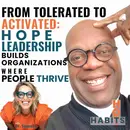
If you've ever wondered what separates organizations that soar from those that stumble, this episode of Hot Habits with Dr. Tamsin Astor and Simon T. Bailey is for you. They don’t just talk leadership—they live it, revealing powerful habits and mindset shifts that turn hope into real results. Explore why hope isn’t just inspiration but a data-backed cognitive force that shapes productivity, retention, and real belonging at work. Get a taste of how leaders can move from just performing to creating vibrant, engaged teams. Listen in on Simon’s own daily rituals and impactful habits that have been part of his sustainable transformation. Are you ready to see why activated, seen, and valued people outperform those who are simply tolerated? Tune in for cutting-edge strategy, neuroscience-backed tips, and memorable takeaways to up your leadership game.
A little more about today’s guest -
Simon T. Bailey is a globally recognized keynote speaker, researcher, and author who proves that hope isn't soft, it's the most measurable competitive advantage most organizations aren't tracking, and has spent 25 years and 55 countries helping 2,600+ organizations build it.
It’s easy to find Simon T across platforms - LinkedIn, Facebook, IG, Threads, TikTok - @SimonTBailey
LinkedIn - https://www.linkedin.com/in/simontbailey/
Website - https://www.simontbailey.com/
Book - Resilience@Work - How to Coach Yourself Into a Thriving Future
https://www.amazon.com/dp/1637559925
Podcast - Amplify Hope Today - https://podcasts.apple.com/us/podcast/amplify-hope-today/id1881115485
I'm Dr. Tamsin Astor, and I am neuroscientist who studies habits in teams, relationships and systems. I'm obsessed with one question: which habits are quietly running your life, and which ones could change everything?
I work with founders and leadership teams to identify the invisible defaults driving their culture, their communication, and their results and then we redesign them, from the inside out.
No one shows up as just "the CEO." You're a founder, a colleague, a parent, a partner, a human… often all before lunch. When you only change habits in one role and ignore the others, you get burnout, misalignment, and a culture that feels brittle no matter how good your strategy is.
My work blends neuroscience, habit design, conscious leadership, and relational intelligence — because your relationships are your leadership. Full stop.
Clients usually find me when they're exhausted from putting out the same fires and starting to suspect: this isn't just a strategy problem. It's a human habits problem.
I believe how you live and lead ripples outward: into your team, your family, future generations. My core values are freedom and love, and everything I build is grounded in honest communication, smart systems, and deep care for people.
Underneath it all? Relationships are my north star.
Grab Your Free Personal Energy Audit
If this episode got you thinking about your habits, your capacity, or where your energy is really going, I made something to help you take the next step.
It’s a free video plus a simple download that walks you through a personal energy audit with AI as your guide. It’s designed to help you see what’s working, what’s draining you, and where small shifts could create more ease, focus, and alignment.
Get the free resource here: https://tamsinastor.zoholandingpage.com/hothabits
Looking forward to being here with you next week for another juicy conversation!
Let’s keep the conversation going.
Join my Substack - https://drtamsin.substack.com/
Check out more episodes - https://www.hothabitspodcast.com/
Hello, join me today on Hot Habits with Dr. Tamsen, as I dive into a juicy conversation with Simon T. Bailey, which will leave you really curious about the data that supports hope, and if you are a hope-sceptic like I was, you will be convinced by the end of this episode. Don't believe me? Dial in. Your nervous system sets the tone. Your energy speaks before you do. How you show up is the culture. I'm Dr. Tamsen Aster, and this is Hot Habits, Conscious Leadership in Action. Hello, I'm Dr. Tamsen, and today's guest is someone I've known for years, and the way I met him tells you everything you need to know about who he is. It was 2019, my first National Speakers Association conference. I sat down next to this warm Magnetic Stranger, who within minutes handed me his number and offered to mentor me on my newbie speaker journey. A few hours later, he walked onto the main stage, introduced as one of the million dollar speakers in the room. That's Simon, generosity first, ego, nowhere in sight. Years on, I've been on his shows, texted him for advice, and he is always, always there. So it's a real joy to flip the mic today. Simon T. Bailey is the world's leading authority on hope leadership, and the architect of the hope economy. A research-grounded framework that proves hope is not a feeling, it's a measurable, cognitive force, and the data is wild. Leaders who actively build hope in their organisations outperform their peers by 28% in retention and 14% in productivity. That's not a feel-good keynote moment. That's real strategy. His path didn't start in a boardroom. It started behind a hotel front desk, got sharp and a sales director at the Disney Institute, and has since stretched across 2600 organisations in 55 countries. And in an era where AI can automate almost everything, Simon is here to talk about the one competitive edge that can never be coded, outsourced, or replaced. Simon, welcome to Hot Habits. Thank you, so good to be with you. It's so fun to be here and have this conversation. So at the start of every Hot Habits episode, I asked my guests to bring an object with them, something that represents a hot habit in their lives. I think of it as a way of bringing leadership out of theory and into everyday reality. So tell me, Simon, what object did you bring with you today, and why did you choose it? I brought this gift that was from the Orlando College of osteopathic medicine. They took me on a tour of their facility, and they gave me this as a gift because living here in Florida, it's an orange. And what this means to me as it relates to hope is Dr. Tamsim, I want to squeeze the juice out of life every single day, and I invite people when you squeeze the juice out of life. You got to say it like that. Not only to create belief, but it creates behavior that creates a better tomorrow. So everyone will go squeeze the juice out of life. I love that. And I love what's also what the subtle underpinning of that is the connection between mindset and behavior. And I'm always fascinated by the debate of which one comes first. And my view is that it really depends on the person, which one is going to shift the needle first. But one of the things that I thought I might start with you is before we start diving into all the research and the frameworks and all the juicy stuff, what's been lighting you up this week? Because you always have this energetic, joyful vibe that just is so attractive and engaging about how you move through the world, which draws people to you. So not in a highlight reel. What's an actual thing that's been happening this week in your life or work that's really got you on fire? I think I heard from a participant that was in an audience and they heard everything that I shared, but they actually went and executed and did something. And got a result. It's like, what? You actually got a result and outcome go figure, right? It's okay. Totally, totally lit me up. But I also, whenever I go into rooms and I find the keynote speaker, I ask the client, can I just sit in the back of the room, sit next to one of the attendees? They probably don't know who I am. And I did that last week in San Diego's invited by Wells Fargo to talk to their top three percent of employees from all over the country. And I'm sitting next to Maria, who has worked for Wells Fargo for 41 years. And I said to her, I said, Maria, like 41 years, what's the key to success? She said, number one, you have to build trust. Number two, you have to execute and follow up. And then she said, number three, ask for the business. And I was like, wow, I go figure. And then so by the time I hit stage, I was like, I just met Maria. And she was like, oh, my God. And she's just from Mexico, New Mexico, Albuquerque, New Mexico. And I had her stand up. And everybody was cheering her on for 41 years. And then I shared her wisdom that she had just imparted to me. And it was just so much fun because, Dr. T, I think we're in a world that is moving from here I am to there you are. There's your brill. There's your awesomeness. And how do we think others? So it's not just about us. It's about around us. So we hug them with our words and make them valuable. I love that, hug them with their words. So the next question I have is about your spot, the spark, which is your movement and igniting sustainable transformation. And I love what you did by drawing Maria and the conversation and helping her be recognized for what she has identified, which are core features of all kinds of business, connection and trust and follow-up. We forget to follow-up. You and I have a beautiful overlap and a beautiful difference. You talk about brilliance is something that's already inside us waiting to be released. I talk about habits as the daily architecture that can bury that brilliance or set it free. Where do you think that spark gets lost most often in leaders? Spark is lost in an environment where people are tolerated rather than activated. And when you are tolerated, you work hard enough to do a job and do just enough to keep from getting fire. So it's that old adage time to make the donuts. There's no spark, there won't joy, there's no love. You know, you're just kind of like, I'm just a bill. Well, I'm only a bill and I'm sitting here in Capitol Hill. You know, you do just no, you know, like off. But the intersection I believe of habits and brilliance therein lies that universal assignment. So Aristotle would say, where the needs of the world intersect with your gift or talent, therein lies that spark, right? Now your habits are not phoned in. You begin to figure out how do I be a solution to a problem. One of the things that I know from having done habit work for years and having sort of studied habits, you know, in the wild, in my clients also, but also, you know, in the laboratory, as it were, it's the sustainability, that's the difficult thing, right? Like COVID, a sick kid, you know, a health issue, you know, something going on at work, you know, staying up to like not getting enough sick, paramenipals, the sweats, all of these things, right? Getting the way of making this the spark, the like the ignition, a sustainable transformation and not just a, oh, I did it for three days or I mean, it's like, you know, we look at New Year's resolutions, right? My February, the gym is empty, right? So I often think of myself as like, my work is what happens the morning after the spark, right? We'll get all excited, right? And then they wake up to the like the reality and it's like, okay, how is this going to be sustainable? So personally, what do you do each morning to like keep that spark alive for you? First of all, I want to honor the work that you do in the world because your work is absolutely brilliant. And I'm just honored to be able to know you and the call you friend because your work is very grounding. And one of the words that you use that is so important is sustainability versus performance. And so sustainability, when you say it, what really literally creates almost a joy bomb in me is how do we look for micro moments, micro steps consistently done every day. So for me, I start off the first part of the day in silent meditation. No, just absolutely nothing happening other than the candles and I may have some soft music. And I just sit in silence for 20 to 30 minutes sitting still because there's so much noise in the world. And what I'm trying to do is to tap into the signal within before I hear the noise that's outside of me. That's the first thing. Then after I sit silent, I will go through a whole meditation routine where I will begin to affirm some things that I'm trying to sensing. I have an app on my phone called day one journal, disclaimer, I have no affiliation with day one. But what I do, Dr. T, is I'm writing in that journal. What am I sensing? What's coming up for me? How am I feeling like what difference am I going to make today? But I'm starting with me. I'm putting the oxygen mask on myself first. And then after I go through that, I am a man of prayer. So I will begin to recite some specific prayers. And I thank God for the day. Like I'm so grateful that I'm alive. So what I'm really doing is before I try to lead anyone else, I have to lead myself every single day, seven days a week. So this is what I've learned from the brilliance of your work is it's got to be added if it's going to be sustainable. Yeah, yes, yes, so true. And I love that you talked about the importance of leading from within leading oneself first, right? The first episode on this season, I spoke with a dare case. And that was basically her entire message. Like if you don't do that in a work, you know, you're not going to have any impact on the outside that's going to be sustainable in a long-term way. And I love that you also reference this as, you know, not consuming everybody else, right? Because I think it's so easy in our world with our phones and all of the different kinds of ways that people can reach out to us to be in a state of constant consumption rather than allowing what's within to emerge. And I've always loved the way my first meditation teacher described meditation to me, which was making friends with yourself. And it seemed like such a simple way of describing it, but it's one of those things when you sit with yourself and you're not filling your brain with other people's thoughts and ideas. It creates this space of, oh, creativity. It also allows you to go into the, oh, am I going into sort of the crude way, the anxiety of what happened to this? What about this and going into the spiral of what the future, right? In the political world right now, it's very easy to get drawn into that or into the more, why did I say that? Why did I do that? Oh, and sort of drawn into. So that process of sitting with yourself allows you to start the day on your own terms and see where your mind tends to go. And then I love that you start with what some people might call manifesting, which is like, what kind of impact do I want to have? Where am I going? What's my direction? What's important to me? And for me, I, you know, yes, manifesting as a word makes sense and the concept makes sense, but actually sort of from a neuroscience perspective, what you're doing is you're laying down the neural pathways, right? You are, you're laying down the connection between if, then, that, if this, that. And then it makes you much more likely for it to happen in real life, right? We see coincidences when we start thinking about things, you know, you buy the red car and you're like, why is everybody driving your red Toyota? Because your particular activation system has been prime, right? So I love that, you know, you, you reference two things that are so important to, you know, the way that I understand myself, my clients, and the data that supports it. Speaking of data, I am really interested in hope and the data around hope as being a measurable cognitive force. Because personally, I've struggled a little bit with the word hope. And I think that was partly because in 2008, when Obama was coming in and the word hope was suddenly reactivated as this thing, like we're going to change the country. My middle child was battling cancer and I had a lot of people saying to me, hope and faith and, you know, real belief. And for me, hope felt like I was delegating my potential impact out there to a sort of amorphous right, rather than researching the best doctors and the best treatments, right? It felt like it wasn't, you know, concrete, right? And I sort of struggled with that word. I've now moved through that, but when I first heard that word, you know, it was such a large part of the energy of the United States. But personally, it felt to me like I was giving up. I was just going, oh, I'll hope, right? Rather than I'll take concrete action. So for me, you know, hope then sounded like a soft word, right? So what I would love to know is, you know, help me and the other skeptics, right? I am less skeptical now, but like I was for a while. I had to really work with that mindset. Tell me about the data because this stuff is just really exciting. Yeah, so Dr. Rick Snyder was a scholar at the University of Kansas. And for 30 years, he researched hope theory. And in his research, what he began to realize is that hope really comes down to a goal, a plan, an agency. Specifically, when he hacked the hope theory, he said individuals have willpower and waypower. So willpower is this agency to say, what can I do? Waypower is what is the micro step that I can take, putting one foot in front of the other, wherever I am in life. That's Dr. Rick Snyder. Most recently, McKenzie has looked at all of their data. And one of the things that they are saying in a world of quiet quitting, where individuals are showing up remotely, or hybrid, or in person, where the lights are on, but nobody's at home, that they're one fry short of a picnic, the elevated white go to the top. I live here in the South. We would say bless their hearts. What McKenzie has said in their data is that it is hope that causes employees and teams to begin to move forward. So we decided to do a study where we hired two PhDs and we survey 1,000 working Americans asking them 27 customized questions. And in our research, we have about a 95% confidence level and a 3.1% margin of error. Some of the statistics that came out of our research was 55% of working Americans would prefer to take a lower job to work for a leader that inspired their brilliance. 74% of working Americans would prefer to work for a leader who had no advanced degrees than for a leader who had formal education. So when we looked at that, we started asking the question of working Americans, how do they define brilliance? And if we gave them 17 different choices, the top three was brilliance is confidence, creativity and intelligence. So when we out, I said, wait a minute, individuals are in an environment work. We spend more time at work than we do at home virtually or in person. What allows a person to feel brilliant in what they do and resilient is because they have hope, they have hope in the leader, the organization, the business, the allows them to develop that confidence, that agency to say, I can move into the future, I don't have to be stuck in the past. One more interesting insight. Dr. Amnierscu from Princeton University says, when the brain is worried, the brain slows down. When the brain slows down, it does, and you know this well, it doesn't create neurogenesis, which is the process of growing neurons, which grows the brain. So wait a minute, hold the phone. If the brain slows down, that's a hopeless brain. That's not a hopeful brain. Let me just kind of summon up this way. A hopeless person is a helpless person, but a hopeful person is a helpful person because confidence shows up as I am sustaining and moving towards a preferred future. So as you were talking, I was thinking about how hope is often weaponized in my, in my, what would be my language with the toxic positivity, particularly in the kind of influencer, you know, sort of yogi, you know, like, you know, hey, just have some mushroom coffee or Iosca journey and like, do a headstand, let me think, you know, which for me, you know, feels really gracing, right, and obnoxious. And as you were talking, I was trying to think, like, what is it about that that feels sort of toxic and not really not the real definition of hope, which is what you're, what you're talking about here. And I was thinking, I wonder if it's to do with agency, right? Because often people will say just like, just smile through it. And it's like, well, yes, but like, I don't feel like I have any power in this situation or whatever it is, right? And so when you, when people say, oh, this stands like, you know, toxic positivity BS, right? Like, how do you help people like pass that out or redefine hope so that they don't confuse the two? This is such a great question. And it's just a little sneak peek into my new book that's going to release that in a little bit. So thank you for bringing that up because hope can sound a bit pallyanish in a world where people are just kind of like, what the heck is going on. So one of the things that people don't talk about the opposite of hope is fear. And I introduce people to the science of actuality, Dr. Robert Hartman's work, which really looks at human value. And I have been blessed with the opportunity to work with Kim Giles, who's created an assessment called 12 shapes. And she worked with a behavioral psychologist years ago. And what they discovered is that they were 12 shapes, 12 personalities throughout the world. And as I've been certified in her work, 12 shapes, one of the things that she's discovered over 25 years, 5 million people have gone through the assessment is that human beings have two fears, two fears that's not talked about the fear of loss and the fear of I'm not enough. And the fear of loss and having no safety, I'm not enough impacts hope. So what we have to add balance and to really help people understand, yeah, it's one thing to say, be hopeful. But what are those fears that drive you? What are those underlying fears that you haven't identified? Because that loss and that fear of not being safe, that's real. And address that, you will never be hopeful. But once you understand what your superpower is, as you embrace the fear, you create hope from the inside out for you. Yes. Now, I think that fear thing is really, really valid. The way that I teach conscious leadership is I use the sort of simplified version of Maslow's hierarchy with the sort of safety needs at the bottom, the basic needs, food, shelter. Then we get to the belonging and love. And then we get to the, you know, the more, you know, the sort of the purpose and creativity and innovation. And one of the things that I so often see with the CEOs that I do strategic planning where they're executive coaching where there's that they're stuck in the, why are my people not innovating and being creative and, you know, in that top bit, and I'll sort of step back and go, well, do they feel like they belong? Do they feel like they have a sense of connection in this team, right? Do they feel safe, right? Are they well slept? Are they, are they, are they earning enough to pay their mortgage or to pay their child care, right? Like, you know, you can't get to those upper levels if those lower ones and we get stuck in our, you know, you know, you know, Western world, right? With, with that top spiral. And as you were talking, it was making me think of that and how we forget, we forget that we need, you know, we need to not be in a state of fear. We need to be, we need to feel safe in our bodies, safe in our homes. We need to feel like the fear thing too. And we meet people. We need to think, you know, are people judging me, right? Can I, can I open my mouth, right? Because we know the data on that is really compelling when people feel known and seen in an organization, which your data alluded to, they are, you know, the burnout drops, they're, they're commitment to the work rises, right? And certain jobs like, I think it's MDs, it's a million dollars to replace them. So these, you know, these things around like hope and connection and belonging, which I think for many years were considered, you know, the sort of soft skills that we don't really need to spend time and then ensure those we need to focus on the bigger KPIs, right? Actually, these things contribute to the KPIs, right? Yes. On that sort of tangent, how do you see or describe the relationship between a leader's internal state and their capacity to generate hope in others? And the reason I bring this up is that I feel like there are some people who sort of emerge in the world who have this kind of innate capacity to generate hope, right? Whether I, you know, I grew up with grandparents that fought in World War II. So Winston Churchill, for example, you know, was somebody who was seen as this iconic figure, right, during World War II, who inspired hope, right? You know, we've got Martin Luther King, you know, we've got these always people, I've got these people throughout our history that we can refer to who have this skill, right? And you can study there, you know, how they work as an orator, right? The way they use, you know, I read a thing about how Obama used like I, you know, I and we and you and we and like, you know, you can use all these particular structures. But when you are working with organizations and seeing this, how do you see this relationship, understand this relationship and work with this relationship between their state and how they generate hope in others? So one of the individuals that I had a chance to interview a client asked me to interview him virtually. He's a guy named Harry Kramer. Harry's the former chairman and CEO of Baxter Healthcare and is a professor of clinical leadership at the Kellogg School. And I asked Harry, I said, Harry, what is it that you have done over your 40 year journey that has allowed you to be a leader that really operates at an optimal level? And he said, Simon, every night, seven nights a week for the last 40 years, I asked myself three questions. The first question is, what difference did I make today? The second question is, how did I grow today? And the third question is, what difference will I make tomorrow? Now, when you think of those questions, the credit method of learning, the answer is in the question, if you assess yourself every night before your head hits the pillow, what you are doing because writing often is therapeutic as you're writing this out old school in a journal, writing this out, you are processing from your central nervous system, from your mind, what did I do today? And at you write that out and you fall into the night season, now your spirit in your soul gives you that dream state and to say, as I wake up in the morning, how do I build the momentum from the day before? And if you ask yourself those questions seven days a week in 30, 60, 90 days, no thing has changed a habit, an approach, a self-explanatory style, even if we were even go deep and I don't want everybody to wig out on me, but what happens is you will discover a new frequency because of what you are processing frequently and that vibration and that vibration when you show up virtually, when you show up on the phone, when you show up in person, it is not about being a better performing leader, it's about being a leader with presence because of work and your vibration impacts people from an energetic level, Dr. J. in her research talks about what allows people to be resilient is high quality connections. And when she talks about high quality connections, what her and Dr. Emily Hefe are really saying is when a person internally is aligned, head, heart and hands, when people step into their quantum field, they cause people to spiral up and they haven't been open their mouth because they sense that I am important, they sense. Last thing I'll say, my coach said to me years ago, Disney was about to fire me because I was in my own way, I was a boss with an agenda, Dr. T instead of a leader with a vision, and my coach said to me, how do people experience you? Because they experience you based on the work that you're doing when no one is looking at you. Oh, I love that. That's all the gosh, what do you see reflective questions? The reflecting at the end of the day, the kind of, you know, moral inventory, right? There's actually really it's cool data that shows that between 10 p.m. and 2 a.m. your brain shrinks, the service vinyl fluid increases and your memories move from short to long term. So by priming the pump, by doing that kind of journaling and reflection at the end of the day, you are contributing to that shift, right? And what gets stored in your long term memories? When I do this, this is what happens. When I sharpen this way, this is what happens. When I prime the pump, right? This is what shifts and changes. So I love that. I love those questions. And again, like doing it every day. The next question I have, I think that sort of continues to dive a little bit deeper on this is we've been talking a lot about the inner work that we do as people and leaders and the way that we can, you know, shift within ourselves and have impact on others. One of the things that I'm sure you have a lot of data experience in because of all of the organizations you've worked in is the environment too, because, you know, I know the neuroscience data on how our environments are structured, massively impacts, you know, our sense of safety, our sense of belonging, our creativity, all of these things, right? So what is your experience about the way that the environments are structured in these different organizations? And how do those, you know, contribute to and build or break trust and hope and all of these, you know, positive connections that we're trying to create in the people that we work with? One of the stats that came out of our research is 74% of working Americans would prefer for their leader to have training and workplace trauma. Workplace trauma is very real, so if a person at one time showed up at a physical building, they interacted with the team, now they're hybrid or they're 100% remote, if a leader has not been certified, developed coach in dealing with workplace trauma, they create an environment of mistrust where people don't necessarily open up and bring their ideas forward. People are no longer seen, valued or understood, 46% of a worker working Americans feel that if they work remote, their leader does not care about them. One of the things that I'm encouraging leaders to think about in the environment is if they meet the team, bring the team together virtually before they do anything and you actually did this, everybody hold up something that's important to them and in 30 seconds just tell a quick story. Why is that important? It allows that person to be seen by their colleagues and to say wow, but to also hear others, here's what's going on. It has nothing to do with business but it has everything to do with engagement. Another thing is that I'm encouraging leaders to find out what is the appreciation language of everyone on the team. I failed at this when I was at Disney because I went to the class and they're like, you gotta recognize your people and obviously research says one minute of recognition creates 100 minutes of initiative. So Dr. T, I bought the team together and I'm like, okay, I'm going to say let's recognize everyone and I recognize Candace on our team that they Candace Braydon never forget this and Candace turns flush red, runs out of the room, I'm like, oh, we're just happy and I said to Beverly, my assistant at the time, I said, Beverly, go after her and find out what happened and Beverly came back and she said Candace doesn't like public recognition. So I said, we should do because all women are right and she said, I thought I slipped it in there, it was right there, Dr. T, it was right there. She said, why don't you send her handwritten note, mail it to her, recognizing her privately in that way, huge epiphany for me, huge epiphany, I'm like, wait a minute, yeah, recognize people in the way they want to receive it. So in creating an environment is really creating a surround sound of who are my people, who are the people, what's important to them and how do I engage them in the way they want to be engaged, not because it's my way or the highway. I love that, yeah, and again, this all speaks to the belonging and being known, right, and the interconnectedness of who we are personally and being seen as like whole humans, right, not just as what our skill set is, right, and my goodness, I could talk with you all day, but I need to dry this into the end. So I'm going to ask one more question in a reflection. So if hope is the operating system and habits are the daily code, what's the legacy version of this conversation? Like what do you want leaders listening to be doing differently in five years because of what they heard today? Wow, I think number one, I want leaders to create a catch and release mindset. When you create an environment where people are celebrated, not just tolerating, you never want to hold on to talent beyond the time that they are supposed to be there. So this catch release program is to catch them when they when they have value to add. And then when they sense that it's time for them to move on, release them into their destiny and be okay, because real leaders are not holding on to the way it used to be. They're holding on to the world is changing at any time. We have to allow people to practice AI, actual intelligence, and move on to bigger better. That's the first thing. I think the second thing is how do we create a generative learning organization where leaders are so comfortable to say, I don't have to lead every meeting. I'm going to end the baton off to one of the team members and let them get a whiff behind the steering wheel of where we're going. Let them put the agenda together. Let them struggle with the questions. And you sit there as a coaching leader watching them drive the meeting. That's how people learn on the fly. Not just what want, want, want, but that here's the here's the other thing that I think is critically important in this world of AI. What we have to ensure is that people are not outsourcing their brain to AI. They are continuing to learn and begin to say, okay, what's the gap between what I know? And we know the intelligence is there. And how are we ensuring that we are staying sharp cognitively, emotionally, and we're having dialogue with each other that sparks that creativity. So my hope is that leaders will continue to focus on critical thinking and also emotional intelligence because those are differentiators moving forward. I love that. That deeply resonates. And it also speaks to a theme that emerged in my conversation with John Burgoff who heads exchange. And the exchange approach is an organization that's about facilitation and that works with Google and BMW and lots of big organizations. And what you just alluded to is one of the things that he referenced to, which was, you know, as leaders, particularly difficult for people who are revered because of their history, their journey, their, you know, their gender, their earnings, their, or their impact is to step back and kind of, you know, let go of the ego for one of a better word and acknowledge everybody else in the room, right, acknowledge the brilliance in the room, acknowledge the wisdom in the room, and, and do it on their terms, right, not do it just in the way that makes sense to you. So it speaks as well to the, to the, to the love languages, right? Like, you know, how, how do you need to be seen and appreciated? So what I think that what I love about our conversation today is a lot of what you've talked about to me feels like there's a, there's a continuum sort of framework for, for what we're looking at. And like the tolerated activated to me is one that I want to play in that space a bit more because it feels really juicy. But what, what, what is so powerful about who you are is you really embody what you do in the world. And energetically, like you were talking about the quantum research and, and all of that juicy data is that if we're going to be leaders who have impact, who are going to be conscious leaders, and by that I define it consciousness aware and leader is influence or impact. If we want to do that, we need to start by looking within, taking care of within, looking without, and seeing what do people need? How can I acknowledge them? And then softening and stepping back and letting people take their own journey, right? Take their own spark. But to amazing. Thank you, Simon T. Bailey for spending this 40 minutes or so chatting with me. I really appreciate who you are as a human. How you show up in the world. And thank you for showing up today on Hot Habits with Dr. Thompson. Thank you for the brilliant difference that you make every day. Thanks for being here. And thank you for taking the time to listen. Until next time, remember that the way you lead your inner world shapes how you lead on the outside. I'm Dr. Thompson Esther. Thanks for listening to Hot Habits.