
 Apple Podcasts

 Spotify

 YouTube
Staying Light on the Path: Lessons from the Camino and Nonprofit Leadership
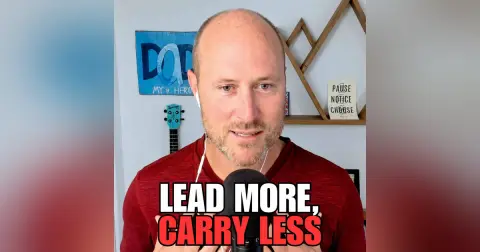
What if becoming a better leader isn't about doing more, but about slowing down, letting go of control, and learning to carry less? In this episode of Hot Habits, host Dr. Tamsin Astor sits down with Tucker Wannamaker, CXO of Thrive Impact, to explore conscious leadership, nonprofit burnout prevention, the power of presence, and the life-changing lessons he learned while walking the Camino de Santiago.
You'll get a peek at what most people miss:
- Why staying light, playful, and authentic can help leaders handle emotionally demanding work without losing themselves in the process
- How walking the Camino de Santiago taught Tucker to release control, overcome mental barriers, reduce distractions, and become more present
- Why nonprofit leaders don't have to live in a constant state of crisis, even when they're serving people who are experiencing one
- How the simple "Pause, Notice, Choose" practice can help reduce stress, challenge the pressure to always be productive, and support more intentional leadership
- Why building strong relationships, understanding people's lived experiences, and creating space for reflection are essential for breaking the cycle of poverty and making lasting community change
If you're interested in conscious leadership, nonprofit leadership, burnout prevention, stress management, mindfulness, personal growth, or creating healthier workplace cultures, this episode offers a fresh perspective on what it means to lead with purpose without sacrificing your well-being. Sometimes, the most powerful thing you can do for yourself, your team, and your community is to slow down, let go of what weighs you down, and make space for what really matters.
Episode highlights:
Chapters
- 00:00:00 Introduction to Tucker and conscious leadership
- 00:03:00 Why Tucker wears flip-flops: Authenticity, playfulness, and leadership
- 00:07:00 Lessons from the Camino de Santiago: Releasing control and practicing presence
- 00:19:00 Simplifying life, reducing distractions, and overcoming fear
- 00:28:00 Preventing nonprofit burnout through co-creative planning
- 00:35:00 Pause, Notice, Choose: A powerful habit for conscious leaders
- 00:43:00 Together We Climb: Breaking the cycle of poverty through community
- 00:51:00 The power of reflection, intentional rest, and leading without hurry
A little more about today's guest:
Tucker Wannamaker focuses on helping leaders move away from traditional planning processes that often lead to burnout and disconnection, toward practical approaches that build stronger relationships, inspire action, and create lasting impact.
Tucker also contributed to Together We Climb: A Community-Driven Approach to Breaking the Cycle of Poverty and Building Prosperity, a book that explores how communities can work together to address poverty and create opportunities for people to thrive.
https://www.linkedin.com/in/tuckerwannamaker/
I'm *Dr. Tamsin Astor,* and I am neuroscientist who studies habits in teams, relationships and systems. I'm obsessed with one question: which habits are quietly running your life, and which ones could change everything?
I work with founders and leadership teams to identify the invisible defaults driving their culture, their communication, and their results and then we redesign them, from the inside out.
No one shows up as just "the CEO." You're a founder, a colleague, a parent, a partner, a human… often all before lunch. When you only change habits in one role and ignore the others, you get burnout, misalignment, and a culture that feels brittle no matter how good your strategy is.
My work blends neuroscience, habit design, conscious leadership, and relational intelligence — because your relationships are your leadership. Full stop.
Clients usually find me when they're exhausted from putting out the same fires and starting to suspect: this isn't just a strategy problem. It's a human habits problem.
I believe how you live and lead ripples outward: into your team, your family, future generations. My core values are freedom and love, and everything I build is grounded in honest communication, smart systems, and deep care for people.
Underneath it all? Relationships are my north star.
Grab Your Free Personal Energy Audit
If this episode got you thinking about your habits, your capacity, or where your energy is really going, I made something to help you take the next step.
It’s a free video plus a simple download that walks you through a personal energy audit with AI as your guide. It’s designed to help you see what’s working, what’s draining you, and where small shifts could create more ease, focus, and alignment.
Get the free resource here: https://energyauditbydrtamsin.subscribepage.io/
Looking forward to being here with you next week for another juicy conversation!
Let’s keep the conversation going.
Join my Substack - https://drtamsin.substack.com/
Check out more episodes - https://www.hothabitspodcast.com/
0:00 Join me today for my juicy conversation on hot habits with Tucker Wanamaker of Thrive Impact. He works with nonprofit organizations that are on the front lines. And one of the things he does is helps them create plans that reduce burnout and actually help you get close to the work you're doing and take action. He also just walked part of the Camino and has a lot of juicy reflections about how going on a pilgrimage like that changes the way you lead. Don't miss this conversation. Your nervous system sets the tone. Your energy speaks before you do. How you show up is the culture. I'm Dr. Tam Zanasta, and this is Hot Habits, conscious leadership in action.
0:43 Hello, hello, and welcome back to Hot Habits with Dr. Tamsin, Conscious Leadership in Action. Today's guest is someone I met in the Exchange Approach community, and I'll tell you now that he is one of the reasons that I love it there. Tucker is the CXO of Thrive Impact, where he helps cities, foundations, and nonprofits find their footing in a world that's changing faster than most organizations can absorb. His conviction is that traditional planning too often leaves leaders burned out and cut off from the very people they serve. So he champions co-creative strategic planning, the kind that leaves a room energized to act instead of producing a document that sits in a drawer.
1:25 He also played an integral part in a book that's coming out this October, Together We Climb, about how communities can break the cycle of poverty and build prosperity together. And as an alumni advisor with the Exchange Approach, he trains facilitators around the world to lead these gatherings that make all of this work possible. Now, that CV is impressive, but it isn't what I'll tell you first. Tucker is the person who says yes when you ask for help. He's had lots of conversations with me about my business development, about how I'm showing up, and every one of them left me more clear and feeling more brave than when I sat down with him. He also gives epic hugs, and his costumes at the exchange parties are genuinely legendary.
2:08 For example, Ken, of the most recent Ken series. And Barbie vibe, there he is singing. There it is. There he is singing it. And underneath all of this is his huge heart, which it's enormous. And I'd argue is the real engine behind everything that Tucker builds. He also just got back from walking the Camino, which I very much want to hear about. So Tucker Wanamaker, welcome to Hot Habits. Oh, my gosh, Tamsin, you're so wonderful. I feel very honored to be here with you. And it is great to see you again. It's been a little bit and I know we saw each other in Cleveland quite a few months ago. And that was such a joy to just be with you there.
2:51 And so it is really a joy for me to be here with you. Yay. Thank you so much for doing this. I know. So at the start of every Hot Habits conversation, I asked my guests to bring a tangible object with them, something that represents a hot habit in their lives, as a way of bringing that leadership out of theory and into everyday reality. So what object did you bring with you today, and why did you choose it? Okay, so I brought my favorite flip-flops. These are some old Navy ones that I literally wear this when I facilitate, when I keynote, when I wear a suit and flip flops. And in fact, I I walk the Camino in sandals.
3:32 I have I got married in flip flops. It's been a thing for me. For the longest time, but what I've realized around partly who the core of Tucker is, but also I work with people who are in the deep trenches of our communities. They're in some of the toughest leadership conditions in our country, nonprofit leaders, and especially human services. Yeah. And so I wear the flip-flops as a reminder of staying light, of like the work we do is really heavy, frankly, when you're working in sexual violence or homelessness or mental challenges and disorders or whatever it is.
4:13 It can get really heavy. It can get really heavy. And so I literally wear flip-flops for myself as a reminder, a constant reminder of when I'm at my best, I'm light and I'm playful. And so these, these helped me to balance myself out almost in a sense. And then when I keynote, um, I usually share that with people at the very beginning because people usually don't see people on flip-flops with, you know, in a keynote. Right. And I have a suit and flip-flops and the contrast is fun, but, uh, You know, it's kind of like a mullet, but with clothes, you know, business on top party on the bottom, I guess. But but I just help like, hey, as I'm going through this, this, this talk or this facilitated workshop, every time you see my flip flops, just be reminded like, hey, just keep it light.
4:58 Let's let's bring lightness to this work because it's easy to get weighed down. So. I should imagine also that the other piece that I would see with that is like, I'm not trying to hide anything to there's something kind of like, you know, this is just like who I am, like you get me who as I am to that, like, that would be something that I would also look at that, which is like, I'm not putting on an artifice, right? Like, This is how I show up, you know, everywhere, which I would feel that as I was listening to you. Well, thank you so much. I appreciate that. I am also somebody like I go on stage when I do my keynotes in like gold lame pants and sneakers because like that makes me feel good and makes me feel like myself, right? You know?
5:38 Yeah, yeah, yeah. Right? And that's part of who we are. It's like we have to show up in our authentic self. Yeah. I love that. So you just got back from walking the Camino and you are my third friend who's done this recently. So I've been picking lots of people's brains. Dennis Pitoko, who I also interviewed on this season, also has walked the Camino. Was there a moment on the trail where, you know, the planner in you, the, you know, the, the strategist, the, this is the deadline, this is the frame had to just completely give up control and what happened? Um, oh, that's a great question. Yeah, the Camino de Santiago was the one specifically I did.
6:20 And I was with a group. And so I had somebody guiding and guiding in terms of like, it's pretty straightforward where you go, but guiding in terms of holding the space. And I was with a group of about six other guys. And there was one morning when we were getting prepared, we were stretching. And I think this was probably one of our like 13, 14 mile days. So I walked probably a total of 90 miles ish or something like that. We did a section of the North route and, and, and the guide, his name is Jeff. Jeff invited us to walk this day. This is probably our fourth or fifth day.
7:02 To walk without any kind of a crutch, quote unquote. Anything that perhaps you don't need. Because simplicity is a key word, especially when you're backpacking, right? It's like simplicity is important as a pilgrim. And meaning lighter weights, lighter weights. You realize you don't actually need that much stuff in your life. And that's been continuing to be a big piece. But he's like, I want to invite you, whatever it may be. Maybe it's your hiking poles that you don't use today. Or, you know, for me, I was like, maybe I just walk barefoot the whole time instead of my sandals, you know, which I would love to do. But it actually ended up being what came to me was I need to go the whole day without my phone.
7:44 Yeah. And man, we're there. So, I mean, I mean, you all know this, like we all have phones and they're, they're so radically practical in so many ways, right? Everything from, you know, I use the Buen Camino app to just make sure I was on the right trail. Although there's a lot of markings and stuff like that. I, you know, take a lot of photographs. And so it meant like, no photographs i'd have to kind of like count on the team to take whatever photos that they hopefully saw were great uh and you know so i had to like lean on other people and kind of go with the team a little bit more but then um and then for me i mean this is very much a faith journey part of this was like uh hey god how are you where are you going to lead me today in a sense and so um So not having the phone was, it was hard.
8:39 I mean, straight up, you know, I mean, there's multiple times. I had it down deep in my backpack purposefully, of course. And there was this one time I was solo and, And I was like, oh gosh, I don't even know if I'm on the right trail. I kind of broke off from the group for a while, and I'd gone down this really long road. We were on our way to this town, or the city, called Yanes, spelled L-L-A-N-E-S, and I was like, gosh, I have no idea. I have no idea where I am. Like, I think I'm on the right road, but I just... And so I'm like, oh, I don't know, and then, And so I broke. I did. I admit it. I broke.
9:19 I got my pack off. I dug down in there. I got my phone. And of course, I'm right on the yellow line, which is in that Buen Camino app. The yellow line is the Camino. And I'm like, oh, of course I am. And so I was just like, no, no more. No more today. No more. I'm like, I don't need this. I don't need this. Yeah. And so that was a big piece. And then there was this one spot. Yeah. Where I knew I was on the right road, but then I saw this other little path and I was like, oh. I was like, that's, I don't know what that is, but I felt just compelled by it. And I paused for a minute.
9:59 I asked God like, hey, because that's part of what you're practicing, I think, or at least what I was practicing was like deep presence, deeper listening. Yeah. And in this case, I was like, I think I need to go down this path. Yeah. So I went down this path. I asked a woman in my not very great Spanish, like, is this the road to Yanes? She's like, no, no, no. This goes to the playa, which is the beach. The road, which is the one I was just on, is the one that goes to Yanes. And... I was like, yeah, I think I'm going to go to the playa. So I went to the playa, you know, and it was so it was just this beautiful, magical moment. I felt like I had with God that I didn't take a picture of, which was wonderful, actually.
10:43 It was like a special moment, like the way that the the ocean came in and this like really small little beach was just like perfect and still. And it was really great. Um, and then the last part of this story is I decided I hate backtracking. So I, but I had to, to get back to the road. Like I know I need to get back to the road, but then I saw this other little trail and I was like, Oh, okay. Whew. Which one do I go? And then I took that trail. It was, you know, one of those very, one of those trails that's not very well worn. It ended up being into this big old brush. And then I saw this trail way off in the distance. I was like, I think this meets up with it. And so I just kept going because I felt like that's where I was supposed to keep going.
11:24 Yeah. And I ended up hitting that and it ended up bringing me back to the road. What I actually found out later, because I looked at my phone to see like, where did I actually go? It ended up being a shortcut, actually. To the whole thing, you know, so it was a little bit of like, I feel like I've been on this journey of, of learning how to listen and be really, really present to not only myself, but also to God and the trails and the paths in front of me to just be, be conscious and phones are crutches. Yeah, quite literally. Right. So not having the phone was like. no, I need to really pay attention way more today.
12:06 So that was one that definitely came to mind. That's really interesting. So I mean, my sort of follow on question for that is, are you now sort of thinking intentionally about how you can manage the crutch of the phone in the rest of your life as you sort of come back into it all? You know, one of the things I actually did, there was this app that I got called Minimalist Phone that like, you know, basically you can change your phone to be really very, very minimalist. And so I actually did that while on the Camino and I haven't changed it back since. Like I don't have... You know, on your phones, you can have, you know, how many little boxes, which basically are just a bunch of noise is what I've realized.
12:52 And so I've stripped down my phone to a really minimalist phone. I still can search for apps and whatnot, but I'm really I'm really trying to work hard on simplicity. And cutting out the noise, it sounds like. I mean, it sounds like a lot of what you're doing is figuring out how to cut out the noise and figure out what is most important. And like to your point of like backpacking, you know, growing up in Europe, backpacking is a big, big part of the sort of European college, you know, experience. And when I emigrated from the UK to the US at 25, I went backpacking with my then husband for four months around Australia and New Zealand, Japan and South Africa.
13:34 And when we landed in the US, we'd shipped a lot of our stuff. We'd put our place on for rent in London and decided that we were going to bring, you know, our favorite armchair and sofa and, you know, our doctoral theses and all of that kind of stuff. And it arrived in a shipping container in the US four months later. And we were both like... why did we bring all this stuff? We've just spent four months living out of a backpack, you know, right? Why, why do we need? And so we sort of sat there looking through like some of our photo albums and, you know, some of those things and going, it's nice to have, but actually to your point, you know, to be happy, to be successful, to show up and do the work that we're called to do in the work. We don't actually need a lot of that. Right. Yeah.
14:14 Yeah. And you know what I was, I was struck by, I mean, so many things I was struck by on this Camino, but, um, um, I was there's so many psychological barriers that we create in our own mind. You know, I was worried about the weight of my pack. It was about 26 pounds without water. You know, I was walking a lot. Right. I actually generally don't like walking because it's pretty slow. And, you know, so I'm like. Okay, right. Like, all right. And people would say like, wow, that's walking a whole lot. You know, and you're like, yeah, it is. And I'm kind of nervous about it, to be totally honest with you. All of that in the fret of my own pack.
14:57 You know, I was going in these sandals that I got, which, you know, most people were like, that's crazy. You know, to not walk in shoes. But of course, I didn't get any blisters, by the way, just throwing it out there. They were amazing. They worked out really, really well. But there's so many, I just was struck by how many psychological barriers I even had of my own around, around, you know, fears of, you know, of, of doing this. Like I was, I was quite nervous with the weight of my pack with walking this much. Would I get a, whatever, would I get frustrated? Would I get like, all right, can we get there? And, you know, and when you just start walking, you know, I mean, your body just starts taking over.
15:38 I mean, it's, you know, I got to the end of, you know, we walked seven days. Most pilgrims who do the Camino walk for many, many months. Not many months, but many weeks. And, you know, the last day, we just had a short four-mile walk. And I was weeping that day because I was so deeply sad that this was ending. And I was like, why did I not know about this growing up? Yeah. You know, for me growing up in the church, like I didn't know, I didn't learn about pilgrimage. Yeah. I was like, no wonder why this is a spiritual practice that people have been doing for millennia. Yeah. You know, it's, it's so valuable and the spaciousness of it and the walking, you know, just the walking countryside in a different way.
16:26 And yeah. Amazing. So I was really struck by just the number of psychological barriers and stuff is one of those things. Like I realized like I don't need this much stuff. I just don't need it. And I need to purge. And I've sucked at purging. I'm a just in case person. You know, I'm like, oh, but what if I just didn't. Man, something is flipped in me after this Camino of like they're all little hooks with weights. Like if you look at every single thing in your environment, in your house. Look at it like a little weight, like a hook with a little weight holding you down. So it holds, it consumes energy, it consumes attention, it consumes focus.
17:07 We have to take care of it. You know, one of the things that I trained in Ayurveda is we do these detoxes and cleanses two to four times a year. And one of the ways we cleanse is not just by changing our diet. We also cleanse our relationships and look at having conversations with people who are really important in our lives and what we need to change and shift. We also cleanse our physical space. And one of the techniques that I used to use is I would try and start my detoxes on the first of the month because there's a really simple hack. And the reason I'm saying that is you and I are recording this on the 28th of September. So the first of October, what you can start doing, Tucker, on the first, you get rid of one thing. On the second, you get rid of two things.
17:48 On the third, you get rid of three things. And on the fourth, you get rid of four things. Oh, that's cool. And it just starts to create this momentum. And it can literally be like one odd sock that has been sitting on top of the laundry for like three months waiting to find its pair. Right. Or it could be like, I'm going to get rid of our second car. Like it can be huge or small. Right. So, but if you start this practice and you commit to it over 30 or 31 days, it's really helpful to build that momentum. Oh, that's cool. I love that. I would suggest playing with something like that if you really want to. build the muscle of purging. Yeah. And I'm a big fan of that. So I would love to connect this to what you do in the world. And one of the things you talk a lot about is the way that the planning leaves leaders burned out and disconnected.
18:33 And there, as you highlight who you're working with, the people who are right on the front lines, right? As you were talking about the Camino and fear, I was thinking about that also with disconnection and burnout, how a lot of times our brains, our hearts, our energy, our resources are limited by fear, by overwhelm, by burnout. So when you are working with leaders who are in that space and they're feeling that disconnection and that like, how can I actually do this? Right? What does that look like in the room, in the body, when you watch it happening?
19:20 I'm trying to think of some specific examples. You know, when I think about just a dear friend of mine that I've worked with for a while, who works in a sexual violence organization in Colorado and you know, I was doing some work with them and helping them to co-create some rhythms for their organization, you know, like very practically had my iPad out and we're like, what are your annual rhythms? What are your quarterly strategic, you know, learning rhythms? What are your monthly rhythms? What are your weekly rhythms like and literally writing stuff out and then and helping them and like, what about this?
20:01 And what about this? It was a fun little design session. But, you know, at the end of it, It was something just so beautiful. She said, you know, even though we work with people in crisis, we don't need to be in crisis. And there's something that happens. And you could like see like this like peace come over her. Um, it was so palpable, like, and we were on zoom, but I could still, I mean, you know, we do a lot of zoom stuff and you can feel it, you can see it. And it was, she like took a big deep breath and was like, we don't need to be in crisis.
20:43 In a sense, it was helping her and their organization take care of themselves so that they might be really present for those who are in crisis, which they had a hotline and everything. I mean, it's like they work with people in crisis, like on the phone. It's happening. Whatever. Okay. Okay. Wait a minute, I'm interrupting, I'm so sorry. I know it's really annoying when people do that, but here we go. Before you chase a bigger title in a six pack, I want to share a quick word about why ambition might just be cortisol with a calendar. Success is a state, not a symbol. Grab the free video and the worksheet that's in the show notes to build habits around the state of success, not just the symbols.
21:26 Real success isn't just a title, an income or the abs. It's the capacity to be present for the life that those things are supposed to buy you. OK, now back to the episode. And I just really appreciated... the space of doing that co-creative process because it was with her and a couple of people on our team. Um, but just having these things, I think that in the, in the space of nonprofits and people who are, who really have this just like impact driven nature to them, um, which is me too. And that when you're connected to the mission in a very human way, like when you're proximate to the very people who you are serving, um, It's like we got to do everything it takes.
22:15 I mean, you're just like, you're like, I got to be all in. And I actually learned about myself. I turned that into if I'm not doing that, something's wrong with me. And that was an interesting revelation, frankly, this summer. And of like growing up in the type of church that I grew up in, the word calling was. has been, I mean, I've heard that word. I cannot tell you how many thousands of times since I was 10, you know, like you're calling on your life, you know. So it's like, I need to be doing something important and relevant. I need to be relevant. But also that, did that create a pressure though of like, you have to like find this big vision? Did it, did it create an, yeah.
22:57 Like I. Oh, a thousand percent. Yeah. You know, and, and, you know, there's some value to it. Yeah. But I, I realized this summer, quite literally this summer, I was noticing and realizing how much anxiety that that creates in my life. Where if I screw something up that I feel, quote unquote, screw something up that I feel is so important and so impactful, that creates anxiety like, oh, shoot, I did something to screw up my calling. Yeah. Or like what I'm supposed to be doing in this world. But then I get like double anxiety because I get like FOMO. Like, well, and then if I miss, oh shoot. So now I need to fix it. Yeah, yeah, yeah.
23:37 Cause if I don't, I'm gonna miss out on dot, dot, dot. And I was like, it's like these two levels of anxiety that would rise up in me that I was so unconscious to. And I started to piece it together over this last year. of, um, of realizing like, I don't, it is, it is very healthy to, you know, create positive change in the world. That is a good thing. If that is who you are and that is what defines you and that is your full identity. And if you're not doing it, it creates anxiety in you, you know, then, you know, there's some balancing that needs to be done. Yeah. And so when I work with nonprofit leaders, I, I, I think about that kind of thing of just getting to know them as who they are, what's important to them.
24:19 Mm-hmm. and trying to notice their anxiety. And that's where, you know, with this particular woman, they deal in a lot of crisis, literally. And so bringing that like, totally opposite energy of calm rhythms, you can count on structure was really valuable to them. And then co creating it together with me was really valuable. I love that. And I think, you know, a lot of what this speaks to is what it means to operate in the world of nonprofits, right? It's that tug of the mission, the desire to be doing better in the world, and then the exhaustion and the burnout and the overwhelm. If you...
25:01 if you sort of think of all of the work you've done, is there, I mean, and maybe what you've just identified, like the importance of doing the inner work and resourcing yourself as the CEO, as the person who's on the front lines perhaps. Is there a, like, you know, like one habit, one behavior, one mindset that that can be really helpful to shift or to acknowledge or to start working on so that they can, you know, step into planning and service from a place of being more resourced. Well, you know, Tamsin, you know this, and I have it literally behind me.
25:41 And it's more of a process map than a, but it turns into habit, which is pause, notice, choose. And, and I cannot tell you how I, you know, I learned that from Dr. Danny Friedland way back in the day when I was deeply involved in the conscious leadership work at Exchange. And I know that you're a very important role, playing a very important role in that moving forward with Exchange, which is so exciting. And. But I realized like pause when I learned when I started to go deeper into each one of those pause. What does that mean to pause? What does it mean to really notice like what's actually happening? And what does it mean to then choose? But to me.
26:23 going deeper into breath work of letting your breath be the bridge. Like it's not woo woo stuff. It's, it's science. Like it's like, it's physiology. It's, you know, there's, there's breath work has been so valuable to me and I didn't even see it coming. I didn't even expect it, you know? And I, I work with people who aren't in nonprofits, like they deal with, um, Real people. Yeah. Like they can't get some woo woo stuff that that's not going to translate. And and so I was like, OK, you know, I need this to translate for me and subsequently for the people that I work with. Yeah. So the power of literally pausing, because if you're in a hurry on a regular basis.
27:07 Uh, hurry, hurry to me is the enemy of creating positive change. Hurry is, in fact, there's one guy who said hurry is the opposite of love. And, and like, what's creating all this hurt? I mean, when you're walking on a Camino, there's this, uh, you're walking a lot. There's this, um, it's called the pilgrim's credo. It was written by a guy named Murray Bodo from, um, I don't even know what century, but he was a Franciscan priest. And I've held on to that so much. And I say it to myself, which is, I am not in control. I am not in a hurry. I walk in faith and hope. I greet everyone with peace.
27:48 And I bring back only what God gives me. And every one of those lines has been meaningful in different ways. But the I am not in a hurry is probably one of the most valuable pieces of like, I started to notice, going into notice, like, What is creating all this hurry? What is creating all this urgency within myself? I had a word last year, which was the word unforced. And, you know, but so it was pause, notice, choose. Going back to your question, it was pause, notice, choose to help me to realize how many things I'm forcing, how many things I'm hurrying because of what. And so I started and so I have slowed my life down.
28:29 I have like really taken pause seriously. Literally, even more so where, you know, I have rhythms like every year I do a solo camping trip up in the mountains in Colorado because I live in Denver. And I have, you know, I went on a five mile walk this morning and just to walk and to pray. And that was it. And to like practice pause, to practice notice of what's really happening and almost give as much space as possible for pause and notice before I then need to choose. Right. And that's interesting. I turn to look at my wall. I've got a wall of post-it notes that are things people have said or quotations that inspired me.
29:10 And about a year ago, I started a journey of self-work. with a particular coach and the phrase that I came up with in my initial journaling was slow and study. Because for me, when I do that pause, notice, choose, is it's giving me the space to study myself, right? Like, how do I want to show up? Am I choosing in alignment with a particular value system? Am I allowing myself to feel this thing, right? And giving myself the space to do it. when things that happen are particularly difficult, I've done some training in Kabbalah in the last year too, is when something comes up that feels difficult or stressful or transformative in some way, you say, pause, what a pleasure.
29:55 So it's the, you know, you receive it as like, why is this happening for me rather than why is this happening to me? Which I think is also a sort of really big part of this work. So you have been part of a book that's about to come out in October, Together We Climb. which is all about breaking the cycle of poverty. And when I think about that, the cycle of poverty is a habits problem and a systems problem, right? So the personal habits, the community habits, there's so many different layers around all of this. If a CEO or a city leader, somebody with power to enact change read your book, what would you love them to do?
30:39 What would be an action that you'd be like, yes, you got it. I would say get proximate to poverty. and realize that it's already next door to you. Or it's already... Part of the thing that we speak about in the first part of the book is defining essentially what are we talking about when we're talking about poverty. It's kind of a big word that's kind of thrown around that basically lets everybody kind of go where their myths take them. Like, oh, poverty is that guy on the corner with the sign. And when we have a graphic in there that's like... Less than 2% of what we are talking about when we're talking about poverty.
31:20 Yeah. And that poverty, based upon how we are defining it, and that is based upon different metrics and measures that are in the United States, is literally in every single zip code in our country. Yeah. Yeah. you know, there's the poor and then there's the working poor. And that's a simple way of understanding it. And that there's a good chance that if you're a business owner, there's a good chance that there's people working in your own business, your employees that um are in poverty and you just have no idea because you never got proximate quite literally yeah and so there so to me proximity is one of the most important things in fact brian stevenson um yeah he's a wonderful guy um who the movie just mercy was based on and he's done a lot of work i would love to meet him one day um but he has a great phrase which is without proximity uh we will not have justice But he takes it even, I actually like how he takes it even further.
32:19 In fact, Tamsin, this is how I love how you like to get down to the nitty gritties of like, no, how do you do this? But he's like, without proximity, you're just a bad problem solver. Because you just don't know. Yeah. You don't know because things happen in the nuance. And so if you don't, if you are not in proximity and in relationship with somebody and understand their story and understand where they are. Mm-hmm. then you don't know. You are a bad problem solver. And I'm sure a lot of business owners and whatnot think that we're all good problem solvers. Well, if you're not in proximity to it, then you're not. It's straightforward. His work is extraordinary. I went to the museum in Montgomery, Alabama.
33:02 Have you been there? It's really, it's the Equal Justice Initiative, the Legacy Museum, and it has a whole section of, um which is incredibly powerful that represents people who've lost their lives to being hung in this country as part of our a part of our history and they have the names and you can walk through this outside space and it it gives you such a visceral like in your face experience of that if you're somebody like me who has never lived that and will never really live that That for me was one of the first ways that I really stepped into understanding that part of American history, that legacy museum, the National Memorial for Peace and Justice that he was part of creating.
33:48 And it was, you know, I went there thinking I'd spend an hour there and like four hours later I was still walking around in tears, just really... feeling that so I encourage you to to to as as Tucker said get proximal with it it's hard to understand it if you just read about and think about it you need to talk to the people you need to go and get yourself involved if you really want to take action I love that that's so beautiful yeah um in the book too we did a really um most every chapter opens with an immersive story about a human about a person um Um, it's all in color as well. Uh, we have a lot of graphics in it. Um, but it's, it's a, it's a very human book that, that is, we're hoping is very accessible to people.
34:31 Um, but it also helps to frame up poverty. Uh, there's a, a, a model that Jason Janz, who's one of the coauthors, um, created called the mountain model. Mm-hmm. which is essentially helping to map poverty. Like, what are we talking about when we're talking about poverty? And it's basically four steps of essential needs. Step one, education. Step two, job. Step three, like, you know, a livable wage job. Yeah. Which most jobs, of course, are 85% are private sector. So, again, if you're a business owner in the private sector, you are probably on the mountain, don't even realize it, or you're in either people who are on the mountain, trying to climb up to the top.
35:13 And then the fourth one is the fourth step, which many people don't even talk about is essentially economic empowerment, like being able to buy your own home, being able to save for retirement, being able to leave $50,000 to your heirs. Well, you know, we all want to get there. We all want to be able to do that kind of thing. The summit though is actually flourishing. And so within, you know, within understanding poverty, it's like, it's not just an economic process. It's actually a relational and a spiritual process. And so we talk about the three different capitals, economic being what the mountain is based on. But there's the relational capital and the spiritual capital that is needed to actually for all of us to get there.
35:54 And we usually ask people when we're in a room facilitating an experience around the mountain model, we'll ask people like, When did you get to the top of the mountain? And who helped you get there? Helping realize like... partly get rid of this myth that we have in our culture of self-sufficiency of yes I did it all on my own and the reality is is none of us have done it maybe there's like a random exception to the rule but for the most part the rule is like no we all had somebody help us yeah yeah you know yeah and so so humanizing poverty in proximate ways and in reading the book honestly will really help to do that for people. Um, cause ultimately community is the strongest force in our, in our country.
36:37 Right. Um, and if we can learn how to do, this is why the book is called together, we climb a community driven approach to breaking the cycle of poverty and building prosperity. Yeah. We all, we all need to be, we all need to be stakeholders, right? That, I mean, that's also really what this is all about. So I've loved our conversation and I know we could keep talking, but I'm going to stop pivoting us towards the finish line. I think one of the things that really struck me as we were talking was the way you dance between like going in there and doing the work and then kind of stepping back at looking at why you're doing this work, why the people you serve are doing this work. And this dance between being in it and then stepping back and going, okay, why are we here?
37:21 What are you trying to create? And that in and out, like the cycle of the inner work and the service and the showing up and the stepping back and looking at the bigger picture. For me, that comes across almost like a cycle that you move through, whether it's that you go on your walks, you go on a pilgrimage, then you dig into this work and you step back. As you reflect on the way you show up and do this work, what is an action or an insight that our listeners could take away from this conversation that you've learned doing this work for so many years? Oh, geez.
38:02 No pressure. Well, I mean, what you were just sharing, Tamsin, of cycles is... giving space for learning. And we don't learn if we don't pause and reflect. There's the old famous quote by John Dewey, the father of experiential learning, which is if we don't learn from our experiences, we learn by reflecting on our experiences. Well, that takes... intention to create the space in which to do it. But what it actually is, is a learning cycle. Yeah. Um, you know, I mean, how many of your listeners and how many, how many times have you or I just like did a thing and we're like, all right.
38:45 And maybe it didn't quite go how we wanted it, but we didn't take the time to excavate what was underneath that. It was just like, Oh, I'm not going to do that again. And then just keep going, you know, like you don't really excavate, uh, what's, what's in there. And, um, But creating a true cycle takes intention. Yeah. And it takes to pause. Yeah. And that's actually very productive. In fact, it's not just like I had to retrain my brain on what productivity really meant. I would put on my calendar for many years, I had this section from 8 to noon on Fridays. Mm-hmm. I would block out a sacred time, I'd call it Think Space.
39:26 And nobody could put anything on the calendar, including my wife, who's like, you know, we have four teenagers, so we have a busy family. And I was like, no, I, this, I had to create intentional space. And I didn't know what that was going to be. What I started to realize was that space of letting my energy kind of go where it needed to go and process whatever it needed to process without agenda, uh, was one of the most productive things I could have done. It retrained my brain around what does recovery look like? What does reflecting look like? And it was like eight to 12. It was four hours. Yeah, that's a lot of time. And at first I was like, this isn't very productive.
40:10 Like, no, actually, it was probably one of the most productive things I could have done because now I have more clear headedness and I have more understanding of what's really happening in whatever that week's work was or whatever I was working on. It was a first step for me in spaciousness to actually understand what the heck is going on. Yeah. Yeah. I love that. And it also creates an energy of, you know, like, what do I need to repair? What do I need to do more of? What do I need to do less of? Who do I need to reach out to by not filling your brain and allowing that what emerges to come out? That's, oh, that's so juicy. Thank you so much, Tucker, for joining me today on Hot Habits with Dr. Tamsin.
40:54 I really appreciate it. Is there any other final wisdom that you would like to share? Oh, just it's worth it. Like step through the fear. Don't, don't let the psychological hurdles mess you up. Like you, you only, you really learn by trying and then reflecting on it. So like try something new, create space. Don't hurry. It's not worth it. It just isn't worth it. Um, so that's my encouragement is, is step out and then go do a Camino cause it's unbelievable. Thank you so much. Thanks for being here. And thank you for taking the time to listen. Until next time, remember that the way you lead your inner world shapes how you lead on the outside.
41:38 I'm Dr. Tamsin Aster. Thanks for listening to Hot Habits.